Showing posts with label Blogging. Show all posts

Tuesday, March 8, 2011

Children are the living messages we send to a time we will not see

I want to ask you to help me correct an inaccuracy out here on the net, an inaccuracy that amounts to an injustice.  Here’s the story:

Neil Postman wrote, “Children are the living messages we send to a time we will not see.”  This is the first sentence that opens his book, The Disappearance of Childhood, which was originally published in 1982 by Delacorte Press.


I can remember being a young doctoral student in the old media ecology program at NYU, I was just 22 when I started there in 1980, and seeing Neil writing the book with a black felt tip pen on yellow legal pads.

Neil Postman wrote “Children are the living messages we send to a time we will not see” as the first sentence of the Introduction to that book, appearing on p. xi.  Here, take a look:


 The Disappearance of Childhood  was the second of Postman's major works providing a critical analysis of television's influence on culture.  It was preceded by Teaching as a Conserving Activity, and followed by Amusing Ourselves to Death.  And if you find Postman's media ecology scholarship at all interesting and valuable, and especially if you've read Amusing Ourselves to Death and you haven't read The Disappearance of Childhood, then you will find The Disappearance of Childhood to be a delightful companion piece, a well-crafted extended essay, and important work of cultural criticism.

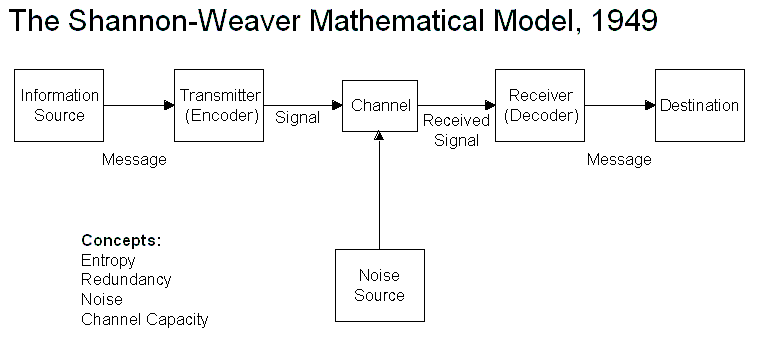
Postman begins by writing that “children are the living messages we send to a time we will not see,” because he was writing about communication, which involves the sending of messages through a channel to a receiver.  In the case of messages sent to the future, the receiver may be unknown to us, but the basic idea still applies.  This view originates in the post-war era with the Shannon-Weaver Model:


 The Shannon-Weaver Model was modified by communication theorist David Berlo circa 1960:
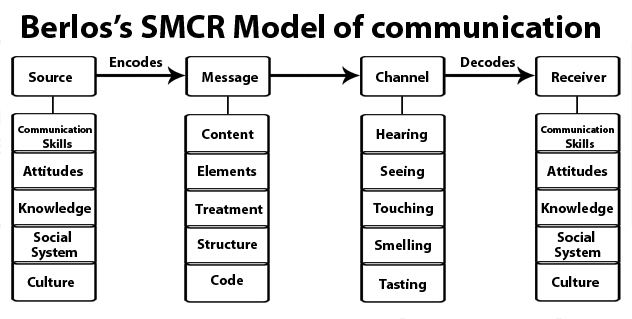


But the important point is that Postman was writing about communication, and thinking about children, and childhood, in terms of communication.  The idea that children are our legacy, a way of projecting something of ourselves into the future, is a time-honored, traditional notion.  But thinking of children as messages, as part of the process of  communication, is a relatively new orientation.  

And as any good media ecology scholar knows, in 1964 Marshall McLuhan declared that "the medium is the message," by which he meant (among other things) that the messages we send are influenced in significant ways by the medium that we use to create and send them   And The Disappearance of Childhood is all about how children as messages are influenced by the media that they use, and that we use to prepare our children to carry on for us in the future.  And it is about how childhood is a message that is influenced by the medium that we use to create it. 

Yes, create it, because childhood is a cultural construct (albeit one based on an underlying biological reality), a message we send to ourselves about biological and social reproduction.  In print culture, children came to be seen as special and innocent, and in need of extended protection as they were cloistered away in schools, while television culture has returned us in some ways to a view of childhood that does not allow for much distinction between children and adults, hence the title The Disappearance of Childhood (which also signals the disappearance of adulthood).

But you really have to read the book to get Postman's argument.  And I only provide this cursory summary to underline the fact that Postman's quote, “children are the living messages we send to a time we will not see,” with its particular emphasis on children and communication, originated out of a very specific set of circumstances, and its meaning is quite clear in that context.  But it also has a wonderfully poetic quality, evocative and compelling, and works quite well standing alone.  Some might even be fooled into thinking it is some kind of ancient proverb, despite its clearly contemporary sensibility.

“Children are the living messages we send to a time we will not see” is Neil Postman's most famous quote.  So what's the problem, you might ask?  And I'm glad you did.  The problem is that when you Google the quote nowadays, you get something like this:


How did this come to be, you might ask?  And I'm glad you did.  You see, this John W. Whitehead wrote a book entitled, ironically enough, The Stealing of America.


And this book was published in 1983, a year after The Disappearance of Childhood.  Just to be clear, here's the copyright page from Whitehead's book:


And here's the copyright page from Postman's book:


And just to dispel any lingering doubts, here is p. 68 of Whitehead's book, where he specifically cites Postman:


The Disappearance of Childhood also is included in the list of references that appear at the end of the book.  

So, are you ready now?  Ok, here is how Postman's quote appears in Whitehead's book, starting on the bottom of p. 116 and continuing on to p. 117:


Ah ha, you may be saying!  Caught red-handed! Well, the problem is that the circles that Whitehead travels in, and the readership that he picks up, is quite different from those associated with Postman.  So who knew?  It would have been quite the coincidence to come across it back in the 80s, or even the 90s.  But, the quote being so poetic and memorable, it got picked up from Whitehead's book, and reproduced all over the place with the wrong attribution.  It appears in some baby book, which probably amplified the error significantly.

Who is this guy, anyway, you might ask?  Well, you can read about him on this page from the Rutherford Institute website:  About John W. Whitehead.   And you can read about the Rutherford Institute on their Wikipedia entry:  Rutherford Institute.  

Not that it matters much.  I am writing this, and asking for your help, not to cast blame or level accusations.  Postman was certainly the easygoing, forgiving sort of person who would not have made a big issue out of this.  But speaking for those of us who honor his memory, and who believe in credit where credit is due, we would like to set the record straight.

The problem is that it is very hard to set the record straight on the web.  It is very hard to get the content of websites changed.  You can send a message, but it may be that the site is no longer active, or no longer actively supervised, or it may be that the individuals associated with the site just don't want to be bothered, or just don't care.  Believe me, attempts have been made, and met with no success.

But, the main thing to do when dealing with problems like this is to accentuate the positive (see my previous post, Digital Damage Control).  So, I am asking you to help to get the word out on the web, anyway that you can.

 Please feel free to repost all or part of this entry on your own blog or site or elsewhere on the web.  Or write your own post about this situation, using any part of this post that you care to, it is entirely open and available for copying and revising.

If you do post this or a similar message anywhere else, let me know, and I will add an acknowledgment and link at the end of this post.

And/or, please link to this post.

And/or, spread the word and the link via Twitter, Facebook, and other social media.  If you tweet, Neil Postman wrote, “Children are the living messages we send to a time we will not see,” that will be less than 50 characters, so you can add, please retweet, include a link to this post or another one, and/or note that we want to remedy an injustice.

 I ask that you please help me to get this particular message out there, get more positive posts and listings out there, and at least we can start to set the record straight.

Neil Postman did not live to see this time of Google and social media, but today, March 8th, 2011, is the 80th anniversary of his birth, and if he were still with us, he would joke about how what we are doing here is launching Operation Childhood, and probably ask if there wasn't some better way for us to spend our time, like reading a good book.  But deep down, he would be very much appreciative of the messages that we now can send on his behalf.  

So I ask you to be a living message now, and for the future.


Tuesday, February 1, 2011

Blogger


While I am not an avid blogger, I do enjoy occasionally viewing them from time to time. My favorite blogs include those that deal with music and popular celebrities. Music blogs are very useful in order to find out songs before they come out on the radio and to keep me updated on future artists to look out for. Other fans of artists that I am interested in may also blog about future concerts or gossip about them. This can sometimes lead to confusion when different people have conflicting stories or information. Because blogging is so easy and accessible, anyone can do it, and one may not know who to believe. This causes me to not believe every blog that I read because I am not really sure about the authority of the writer, along with the comments on their blog.

While I do not trust all blogs, I feel that blogging is a great form of new new media. It allows people to express how they feel individually or in response to those around them. I feel that it makes everyone feel important and the possibilities are endless when it comes to blogging. You can read one about anything or you can write one about anything. I also do not think that there is any competition between old media and this form of new media. The two seem quite symbiotic in that they both need each other. People blog about what they see on the news or hear on the radio. It allows fans to interact with each other and viewers to give feedback on what they enjoy. It is a great step forward and supplements the world around us today.

Attracting an Audience

I don't visit very many blogs when I surf the Internet, however, the blogs I do visit happen to be some of my favorite sites. There are a few characteristics of blogging which I think make it a very appealing and an easily accessible medium. One aspect is the "de-professionalization" that Dr. Levinson writes about in out book. The Internet is a great resource for finding out about many things very quickly. Blogs are typically written using relaxed language, which lends itself to being read quickly.

The blogger has complete freedom over the posted content, and can instantly post a story that they want to share. Sometimes a blog can even be treated like a public diary--a place to transfer your thoughts directly from your mind to the rest of the world. In this way, readers receive a story that is as close to the writer's personal recollection as possible. A blogger's ability to relay a stream of consciousness is on the opposite side of the spectrum when compared to watching the news and hearing someone say "this reporter believes..." The reporter is removing him or herself from the situation, whereas the blogger is inviting you into an experience.

The other aspect of blogging that is so inviting is the interaction between the blogger and reader. The reader is given the opportunity to contribute to the blog via the comments. In fact, comments are such an integral part of a blog that no blog is complete without them. With comments, a blog becomes a community, and is similar to a forum. The commenters get to know each other, and they relate based on their shared interest in the blog. This recalls the old bulletin board system in the early days of the Internet.

Ideally, a blog will gain attention and attract many people to comment. A big problem, however, is promoting your blog and making it known. People can't comment if they don't know you exist. Since there is such a huge variety of blogs out there, most blogs fall into obscurity and die a painful, lonely death. Although some people do it just for fun, and not for the sake of watching the hit counter grow, there's an undeniable thrill involved when you know that people are coming to your personal blog, reading what you have to say, and actively participate in the comments.

Several years ago, a few friends and I started our own group blog and accompanying podcast about games and tech. We started the blog on Blogspot, and made the podcast available on iTunes. We posted news that we found from all kinds of sources, and also wrote our own articles, editorials, and featured reviews. We linked to several blogs and websites that were similar to ours, and in return, managed to get some really popular blogs to link to us as well. In order to make people aware of our blog we would post about it in forums and comment sections, and explain how we had a different take on things. Probably the best promotion for our blog was when certain other blogs would link to the articles and reviews that we posted. This gave us the attention we wanted, and our goal was to give people a reason to keep coming back.

Our main focus was the podcast, but the blog was home to supplementary information in between recording sessions, as well as the written content that couldn't be featured in a podcast. We secured a small, but dedicated following almost right away. The podcast received a couple hundred downloads per episode, and the blog managed to get several thousand hits. We could track how many hits we were getting and other stats with simple counters through Blogspot. The most satisfying way of measuring the blog's activity was through comments. Whenever there were a couple comments on a story, that's how we knew there was an interest in what we were doing. Seeing other users show interest was what gave us the most pride, and we even had people volunteer to make us headers for the blog. The most frustrating thing was seeing spam comments. It was really prevalent, and something that had to constantly be monitored.

Over time, we received emails from people running similar blogs and websites asking us to write content that they could post on their own sites. There were a couple of blogs we agreed to affiliate ourselves with in an attempt to try and gain more attention for ourselves. One blog in particular was run by a chaps in Britain. We got to know them pretty well over time, and even appeared as guests in their own podcast thanks to (what at the time seemed like magic) Skype. Eventually we received emails from people asking about hosting, wondering if we were interested in ditching the Blogspot, and buying a domain name.

Becoming a website without the ".blogspot.com" was something we considered pretty seriously. We looked to Word Press, and other simple alternatives, but ultimately decided against it. After 7 or 8 months our following was consistent, but we hadn't significantly grown. We felt the same satisfaction in seeing the couple hundred people download our podcast and thousands of people that had visited the blog and we appreciated the following we had. There really was a tremendous pride in knowing that we had created something that other people were interested in.

The blog and podcast were a great hobby, but it was something that was taking up too much time and effort to maintain. 2 of our 5 members dropped out after 6 months, and a month after that only myself and another member remained. We decided that we would either have to get even more serious by dedicating an even greater investment of time, and now money for hosting, or we would have to let the blog die. Ultimately, we chose the latter. It was extremely disappointing to have to give up on something that we had worked on for so long. We also felt disappointed that we had to leave the followers that had been with us since the very beginning. There were many instances where we thought about making a comeback, but we thought about how thing fell apart at the end because of time management.

Having gone through this experience, and getting but a minute taste of success (in the grand scheme of things, hits that consistently stayed in the low thousands is so little) I understand the dedication it takes to maintain a successful blog, and how difficult it is to make people want to visit your blog instead of the countless others that are so similar.

Not all blogs are created equally

At least from my experience.

The basic set-up for a blog is simple enough. We coughed this one out during class in a matter of minutes. However, establishing a powerhouse blog that people return to everyday for whatever it is you're blabbering about has become somewhat of a rare art form. Sure, there are tons of popular blogs and bloggers out there, but the ratio between them and the regular blog that gets that solitary impression everyday (possibly from the creator himself) puts the Perez Hiltons and Michelle Malkins in a fairly elite group.

I feel like I'm a fairly intelligent and interesting person who could possibly write a couple of articles a day and hopefully monetize it, so once upon a time, I decided to give it a go.

The first big decision was what I would write about. Do I write about celebrity gossip like Perez? Well I don't exactly have great sources other than... well... Perez Hilton and TMZ.

Should I do political commentary like Malkin? No, that wouldn't work either. Again, my sources are limited, and while free speech is a basic right, the idea of a "citizen journalist" sends chills up and down my spine particularly because they wouldn't be held accountable for what they say, unlike actual trained journalists. While the practices of the current crop of journalists is fairly questionable, at least they can be held accountable. Plus, real journalists have the sources, networks, and access to information that bloggers can never get... unless they become actual journalists... but I digress.

So politics is out. How about sexy girls? I'm sure that would be a hit. Sure, but I'd have to invest money to get copyrights to images... it's a whole process... not worth it... not my style... silly idea.

Food/travel/culture blog? I'm not a chef although I do cook, my travels consist of day-long flights between JFK and Albuquerque Sunport, and I'm not exactly a film expert. I like music and TV, but I don't feel like I'm in any authority outside of my circle of friends and The Ram to topple the Roger Eberts.

Sports! I love sports. Football, in particular - the European version - is a topic I am incredibly passionate about. But again, what gives me the right to be the go-to person for Liverpool fans? I live across the pond and I've never been to Anfield, Liverpool, or England for that matter.

Then this happened:

John W. Henry, Liverpool FC owner posted that on Twitter. An open challenge to Liverpool supporters everywhere to aggregate and grab statistics (what he's known for with the Red Sox) from the numerous publications who post rumors about the club.

This was my shot.

I retweeted, accepted the challenge, and my journey to blog fame began. He posted that at around 8 PM, and I had "Red Rumours LFC" live by 10 PM. I created a Twitter page, and announced the arrival of "Liverpool's Media Watchdog." The concept was simple enough. I had an algorithm and everything. Just copy all the rumors I find on the internet, plug them into Excel, and at the end of the year, get percentages. Good to go.

By midnight, my email inbox began exploding. My personal Twitter account went from about 7 followers to about 50. The blog's Twitter had over 500 followers within the first 30 minutes. By midnight, I had a team of over 14 people worldwide who volunteered to help out. We had geographic zones, departments, and everything. We were on our way to becoming a blogging giant!

And then this happened:

John W. Henry retweeted my blog for what was one of possibly the quickest promotions I've ever seen in my life. This was at around 3 AM ET. My shot-in-the-dark ambition was manifesting before my eyes. I got the seal of approval from the guy who owns the freaking team.

By 4 AM ET, around 9 AM in England, the Twitter account had well over 5,000 followers. No turning back now. My team got to work. Everyday, we'd post rumors, who said them, etc. Turns out it's difficult to manage a global team of people you don't know and can only chase via email.

By Christmas, the blog was all but dead. I was down to 4 staff members plus myself. The amount of articles being published was in the thousands, and we couldn't keep up. We have put the blog on hiatus since, we've missed the last transfer window, and we've faded into obscurity. We're working on addressing many flaws we've made from the choice of using Blogger instead of Wordpress, to the day-to-day collection of data, to RSS/Atom promotion, Pings, etc. We're planning a relaunch in the summer, but that's wishful thinking if we get it back up and running at all.

Moral of the story is that while it is easy to start a blog, it is definitely tough work to get it at a level that would meet demand. We were getting about 9,000 impressions a day, and several hundred emails, and we were swamped. We lacked the resources to even just keep up with tabloid rumors, let alone independent websites, fanzines, and other blogs.

The experience allowed me to respect the process of blogging, and big kudos to those who have found success. It's a tough thing to do, but I'm definitely still going to try and get my own blog out there. It's just a matter of really putting in a good strategy, time, and a ton of effort to making sure every detail is executed properly.

What's the Purpose of Blogging?

In my opinion, Blogging is a very interesting concept of new new media. The reason I say that is because I don't really understand what is the point of blogging? A blogger writes about anything he or she wants whether it is a movie review, a personal top ten list of songs, cheat codes to a video game or how well the day went. Somehow, there will be at least one reader that will read the blog. However, the trick isn't about writing it; it's about getting more readers and making sure they come back. A creative blogger will come up with ideas that interest the majority of people so they will actually come back. But what does the blogger get out of all of this? Most bloggers seem to do it for fun or because they love to write. Nowadays, bloggers can even make money from advertisements using Google AdSense or even Amazon Associates. Now that is an incentive to blogging!
Fun fact about me: When I was in high school, I decided to create a Xanga. At first, I was doing it because my friends had one and I wanted to try it out. The problem was I didn't have the motivation to write every single day. Eventually, the blog became an outlet for my emotions. Whenever I was upset and wanted to vent, rather than bothering my close friends, I would write it on the blog. Of course, I didn't make this public (only my closest friends could read it), but it was a way for me to get my frustrations out. Since that's how most of my friends started blogging, that became my definition, which isn't the norm today.

Monday, January 31, 2011

Blog Blah Blog

Looking back on my childhood, I mostly remember toys and playing outdoors and watch cartoons on Nickelodeon and Disney Channel original movies. I remember coloring and playing board games and capture the flag.  However, I have a very distinct memory from first grade, in which my class of about 25 sat at outdated (now) blue-screened desktop computers.  These foreign machines used some slow electronic means of operation called dial-up and seemed pretty impractical to me.  Fast forward several years and I remember the torture of Type to Learn and the joy of Oregon Trail and Zoombinis. I understood the computer as a means of playing games like Bugdom and playing with things like WordArt.  Then I remember when I first discovered that nifty old communications tool called AIM.  Oddly enough, in every communications class I have taken, this form of social media has yet to come into discussion.  I remember having buddy lists and chatting with all my friends when I got home from school.  There were robots you could talk to like SmarterChild and info boxes you could fill with information about yourself.  These info boxes, were, in a way, my first experience in blogging.  Of course, it was not a continuously updated blog with a string of my previous posts behind it.  However, it provided me the opportunity to write whatever I would like for all my friends to see.
This, of course, was nearly a decade ago, and blogging has developed quite extensively since then.  I myself keep up with a number of blogs covering different topics.  Perezhilton.com provides me with hours of gossip about my favorite and least favorite celebrities.  Brobible.com shares humorous and useless information and news for the college-aged kids entertainment.  A personal favorite of mine is BrianJayStanley.com (Aphorisms and Paradoxes) which is an individuals inspiring and intellectual collection of thoughts and observations.  Aside from these I read random fitness and fashion blogs as well as an assortment of lifestyle, photography, music, or quotation blogs that pop up on google.  Most of the blogs I read are fairly well-known, main-stream sites, and the authors and founders typically profit from my viewing their pages.  However, I have, in my experience, come across quite impressive and inspiring blogs by individuals who merely post for personal pleasure or hobby.  In fact, I have come across frightening blogs chronicling the daily lives of anorexic females or blatantly racist males.  A country in support of free speech, blogs allow individuals to share their thoughts with the world, or maybe more realistically any person meandering around the pages of the web that comes across it.
While there are creepy and uncomfortable exceptions to the case, I believe blogging is a healthy and interesting way for people to share their emotions, hobbies, ideas, and experiences in a safe an interactive manner.  It is difficult, though, to differentiate blogs from non-blogs with sites such as textsfromlastnight.com and collegeacb.com.  The former consists of user-sent information, sorted through and posted by the site owners and the latter is a sort of anonymous chatroom based on college campuses.  I suppose neither of these could be truly called a blog, since neither is a string of postings by a specific or multiple specific writers.  However, site like this are allowing consumers more and more to become producers of their own favorite webpages.